Costume, music, floats: where to see France’s vibrant carnival parades
Celebrate the end of winter with feasting and fun at a carnival near you
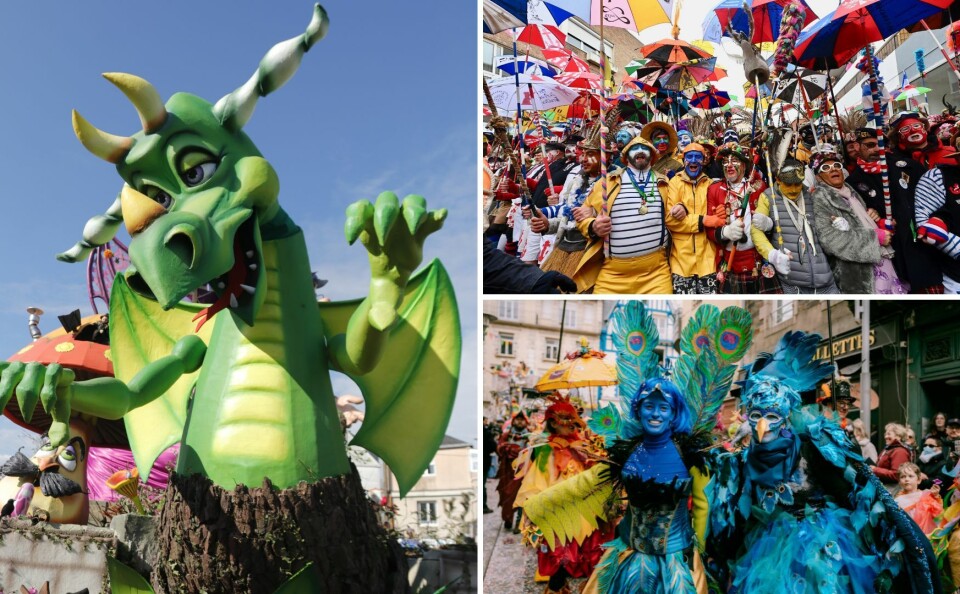
(Clockwise from left) Cholet carnival in Marne-et-Loire; Dunkerque’s carnival is boisterous; Granville carnivalCatherine Fonteneau / Ville de Dunkerque / OTGTM Cecile BALLON
Like so many other cultural traditions, the roots of carnival in France come from the pre-Christian celebration of the end of winter.
The word itself comes from the Italian carnevalo – carne (meat) and levare (remove), describing Mardi Gras or Shrove Tuesday, the last day before Christians adopted a strict diet during the 40 days of Lent.
This period reflects the 40 days Jesus is said to have spent in the desert being tempted by the devil.
Before Christianity, however, it is a commonly held belief that people celebrated the end of winter with a big feast before starting on an annual lean period.
During February and March, people would have to eke out food supplies until the first early crops could be harvested.
Then hens would begin to lay again, the first lambs would be born, some sprigs of mint would push through the cold earth and perhaps there would be a handful of early green peas.
Advertisement
In ancient Rome, the new year began in March.
Today in France there are spectacular carnival parades all over the country.
In some larger cities the celebrations continue for weeks on end, and as well as parades there are masked balls, concerts, dancing, fancy dress and music in the streets.
There is also a joyous tradition of clowning and imitation, in which the roles of bosses and workers are reversed.
Nice carnival theme is Long live the Queen
One of the largest and most famous is held in Nice. This year the dates are February 11 to March 1 and as always, most of the action is centred around the Place Masséna and the Promenade des Anglais.
The event attracts some 200,000 spectators who come to admire the two hour-long parades and the bataille de fleurs, in which flowers are thrown into people's faces.
This year the theme is Vive la reine (Long live the Queen).
The second Friday is devoted to Lou Queernaval, France’s first LGBT carnival. It is free but you do need to book a ticket.
Events kick off at 20:00 on the main stage with an opening cabaret show followed by a parade featuring, amongst other delights, drag queens in elaborate costumes.
Afterwards, the action shifts to the countless parties that take place in the bars along Rue Bonaparte.
Venice carnival comes to Annecy
For something altogether more poetic and romantic, the Venetian carnival in Annecy is worth visiting.
It takes place over a single weekend (February 27-March 1) and makes the most of Annecy’s nickname, ‘the Venice of the Alps’.
None of the costumes are supposed to leave any skin visibleDidier Baillet
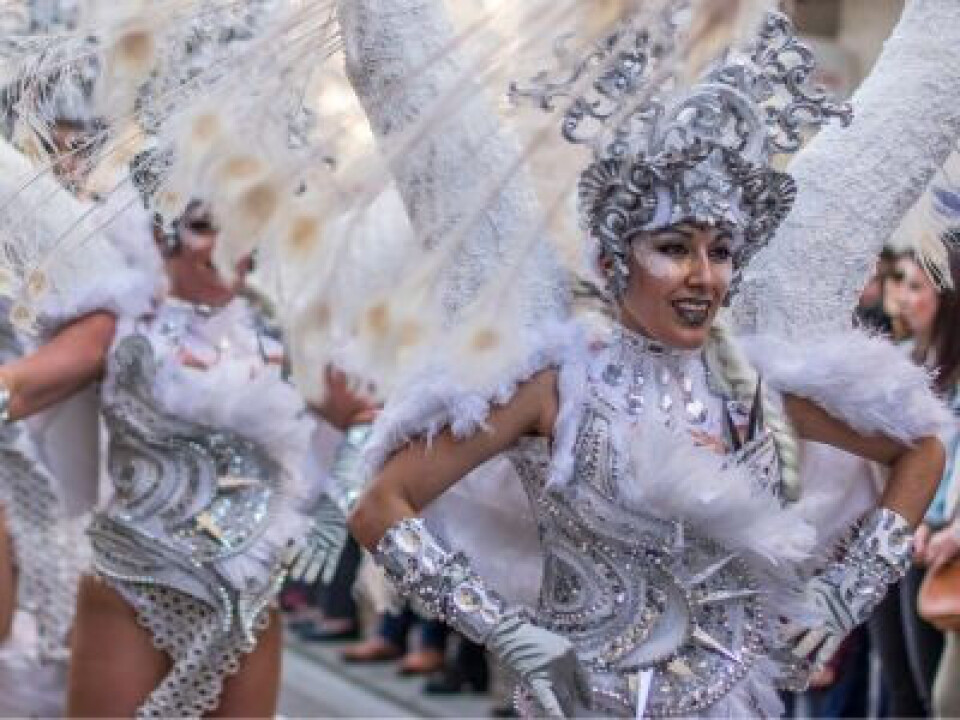
The narrow, cobbled lanes beside the canals are filled with around 500 mysterious creatures in white masks wearing sumptuous costumes often richly embroidered and decorated with pearls.
The event dates back to 1995, when Annecy was twinned with Vicenza, a town in Italy around 100km from Venice, and the Association Aria 74 (Association Rencontres Italie Annecy) was founded.
This association runs the carnival and helps around 500 participants make their masks and costumes.
Some of them belong to the association, and others come from Remiremont (Vosges), which was the first town in France to hold a Venetian carnival.
Amongst them you can spot men wearing a traditional bauta – a black tricorne and cloak with an extremely pointed white mask which dates back to at least the 18th Century.
You can also see women wearing a loup, a half-mask in velvet or satin, dating back to the same period, and the gnaga, a feminine costume with a cat’s mask.
Set against the magnificent medieval backdrop of the lakeside city, the effect is strange and beautiful. Instead of formal parades, the participants wander the town, strolling in the Jardins de l'Europe, le Pâquier and the Vieille Ville.
Everyone dresses outrageously for Dunkerque’s carnival
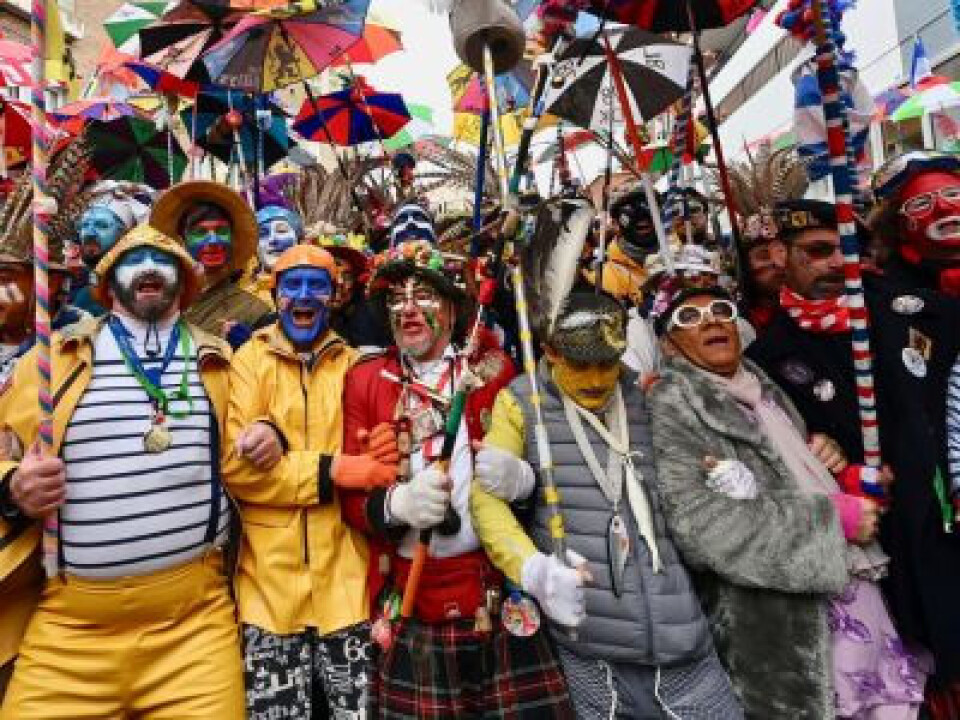
The atmosphere at Dunkerque’s carnival is altogether more boisterous and colourful, with balls, bands and street parades.
This year it started on January 3 and will continue for nearly three months.
It is said to have originated in the 17th Century, when ship owners gave a feast for the crews before they left to fish off the coast of Iceland for six perilous months.
The highlight of the party is the Trois Joyeuses, the three days before Ash Wednesday.
Everywhere you look, merrymakers will be sporting fuchsia and lemon yellow.
Everyone dresses up outrageously and even people not in full fancy dress wear dazzlingly colourful accessories and face paint.
Dunkerque’s carnival is boisterous and colourfulVille de Dunkerque
The Bal des Gigolos et Gigolettes on February 21 gives a flavour of the glorious mayhem.
Ball tickets have to be bought in advance, but the street parties are open to all.
The local name for a carnival outfit is a clet’che and lots of residents keep their costume from one year to the next.
Some are very well-known – the Pizza, the Green Giant, Big Ears, and La Majorette make an appearance every year.
Other popular elements include extravagant hats, masks, face paint, fur coats, kilts, walking boots, and brightly coloured umbrellas on tall sticks.
The complete programme is available online or from the tourist office.
Cholet in Marne-et-Loire burn the King of the Carnival float
There are also some spectacular carnivals in lesser-known destinations.
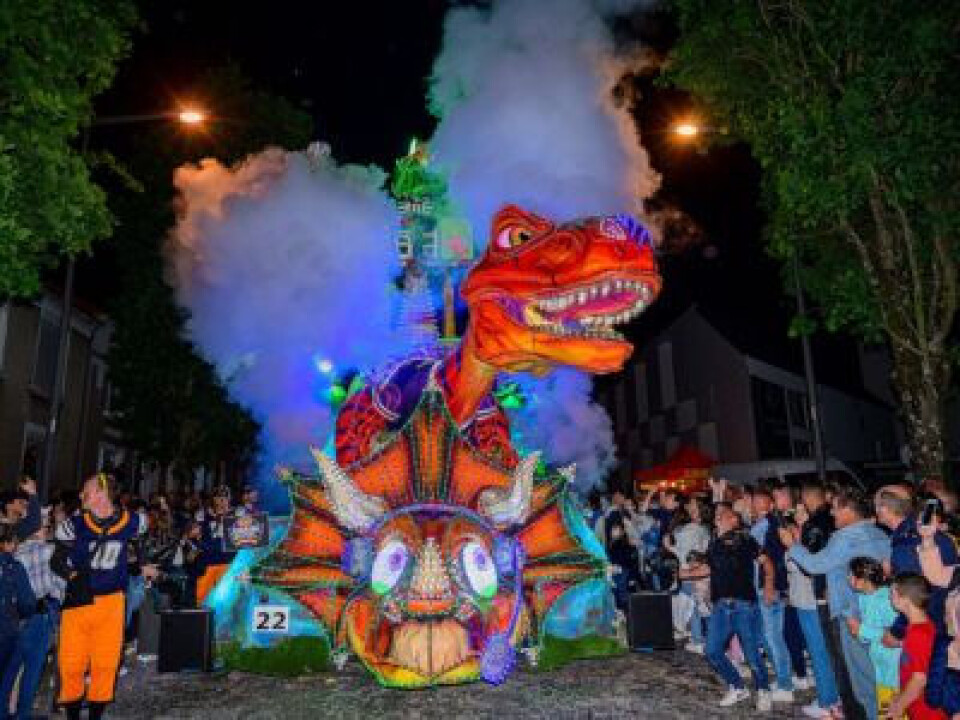
Cholet has an evening paradeSerge Cousseau
Cholet in Marne-et-Loire is holding its carnival on Saturday, April 18 this year, and the evening parade is on Saturday, April 25.
Between the two dates, there is a full programme of concerts, dances and other events.
One of the only carnivals to hold an evening parade, the entire town will be dazzling with its spectacular lights.
The King of the Carnival ceremonially burns a specially constructed float at the end of the festivities.
152 years of Granville carnival in Normandy
This year Granville is holding its 152nd carnival from February 13-17, culminating in the judging and executing of the king on the Plat Gousset beach.
A jubilant crowd have, in the past, also burned the king on the Cours Jonville. This is not, however, an expression of Republican fervour.
In the same way that ceremoniously handing the keys of the city to the elected Ladies of the Carnival signals the start of the festivities, burning the king of the carnival (the master of ceremonies) signals an end to the licence and freedom of the weekend and a return to normal life.
Music, dancing and confetti in Limoux
Another small town with a large carnival is Limoux, which celebrates every weekend from January 10 - March 22, with bands, concerts and parades.
Limoux is a small town with a large carnivalAnthony Molina
Groups of costumed players make their appearance to live music on the Place de la République on Sundays at 11:00, 17:00 and 22:00.
The tradition dates back to 1604, when local millers used to parade through the streets throwing sugared almonds and flour at the crowds to mark the day they paid their taxes at the monastery on Shrove Tuesday.
Today, groups of people in fancy dress roam from bar to bar playing music, dancing and throwing confetti.
Witches, demons and weird animals in Mulhouse
In Mulhouse, the carnival takes place from February 18-22, but the run-up to it started back in November 2025, when they elected the Prince of the Carnival, as well as the Queen and her ladies.
Local associations and groups make stands, and there are marching bands, spectacular parades, music and dancing.
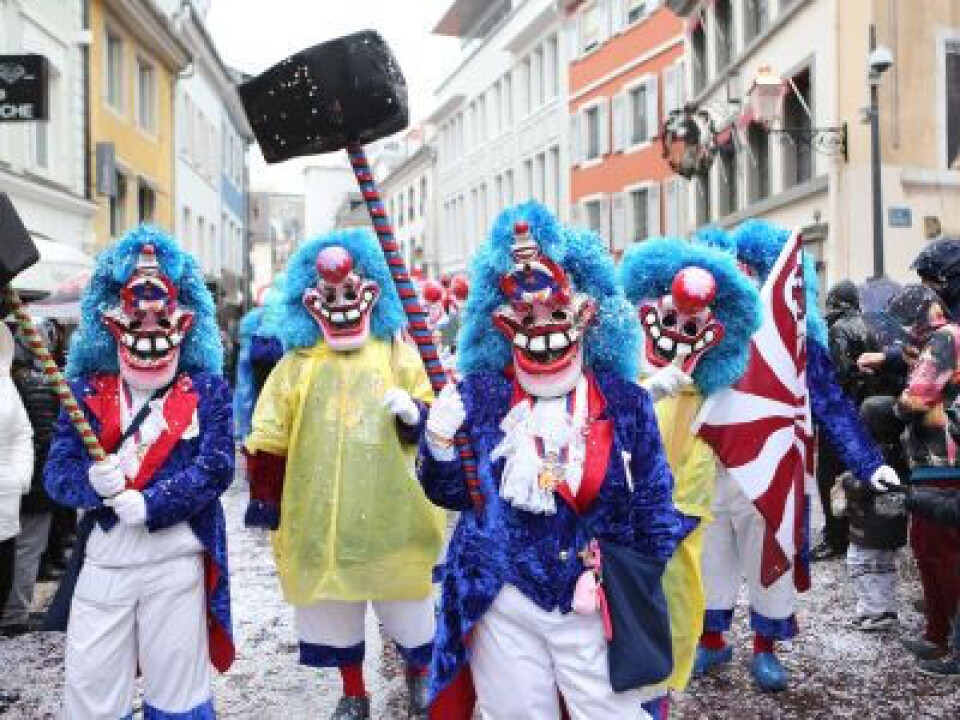
Grotesque characters like witches, demons, and weird animals in MulhouseVille Mulhouse
This is a Fastnacht carnival (from the German words fast meaning to fast and nacht meaning night), with grotesque characters like witches, demons, and weird animals.
The keys to the city are ceremonially handed over on Friday evening and the children’s carnival takes place on Saturday afternoon, followed on Sunday by the International Parade.
Throughout the weekend there are workshops for making masks, baking pastries, face-painting and more.
Children’s carnival in Albi near Toulouse
The funfair for the 70th edition of the Carnaval d'Albi opens on February 21 at 14:00, and the keys of the city are handed over to the Queen of the Carnival on February 28.
The first parade, including huge floats and troupes in sumptuous costumes, will take place on the March 1 and there will also be a special carnival event for children on March 4.
The second parade will be on March 8 and the streets remain strewn with rainbow confetti throughout.
Caen hosts largest student carnival in Europe
The Carnaval Étudiant in Caen (Normandy) was founded in 1894, lapsed in 1969, and was resurrected in 1996 by a group of students.
It is the largest student carnival in Europe. It will be on March 26 this year.
In the afternoon a parade will wind its way through the ancient streets of the old town to the Parc des expositions for a DJ party which will continue into the small hours.
Around 35,000 people are expected to attend and as the name suggests, it will be a predominantly young crowd, and as the date suggests, the celebrations will have only the slightest relationship to any kind of religious observance!
Last year, the carnival attracted even bigger crowds to celebrate its 1,000th anniversary.