


money
New ‘riot tax’ set to be levied on insurance policies in France
A 0.8% increase to home and vehicle insurance is planned to be introduced from 2027
MOST POPULAR


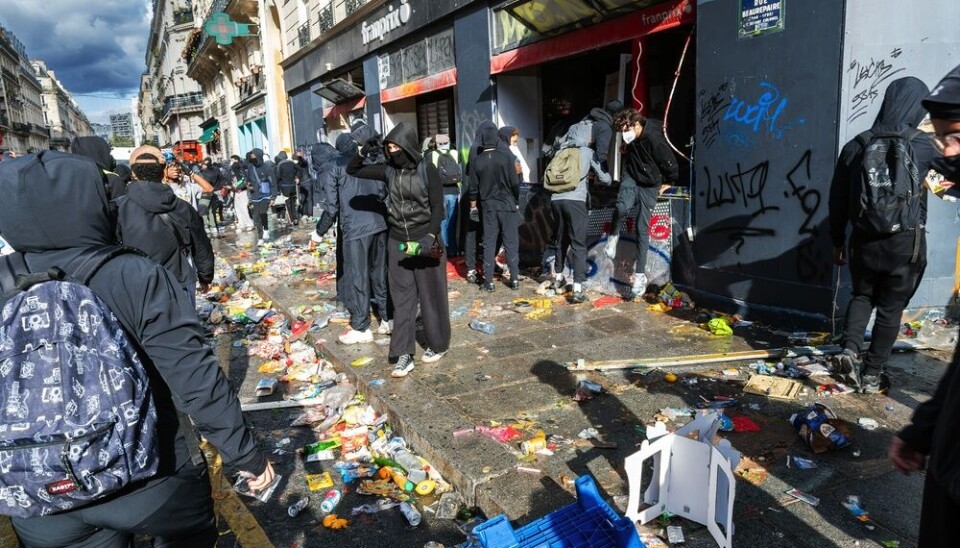
A new so-called ‘riot tax’ to cover the cost of repairs from protests in France is set to be levied on insurance policies starting from January 2027.
The ‘tax’ will take the form 0.8% levy on home and vehicle insurance policies, as well as policies held by local authorities and businesses.
Money raised will be siphoned off into a fund specifically for damage caused by rioting and urban violence. The fund will receive around €400 million per year, the lion’s share of this directly from the new levy.
The policy, first suggested in 2023 and included in the 2026 budget but yet to come into force, made headlines once again following damage caused in protests on October 17 and 24, which estimates suggest has reached €1 billion.
However, the fund is not retroactive and will not cover damage from these riots or any others that take place this year.
While the levy is legal following its inclusion in the 2026 budget, the decree introducing it still needs to be approved by France’s Conseil d’Etat before it can be implemented, with the body set to look over the proposal in the coming weeks.
If validated, a full overview of the regulations will be published in France’s Journal officiel.
It is modelled on a similar levy for natural disasters (catastrophe naturelle), which sees funds raised from a special levy on policies set aside to be used solely in the event of claims following a natural disaster.
The ‘riot tax’ has been criticised as an additional expenditure for households during a cost of living crisis, and a punishment against residents and vehicle owners who must now foot the bill for the actions of a violent minority.
However, the state has maintained it is necessary to provide assistance for smaller businesses damaged during protests through a collective effort. It has noted too that some insurers are now hesitant to offer riot coverage, leaving smaller businesses at risk.
Independent of this levy, a ‘rioter pays’ bill (casseurs-payeurs) has recently been approved by senators. It would see people found guilty of participating in a gathering that led to damage or looting held civilly liable for some of the repair costs.
In cases where looters could not pay but are on benefits, the current version of the law would allow the state to take some of their payments away to cover these costs – a controversial measure.
It must still receive final approval from MPs, and is not yet guaranteed to come into force.
Levy covers most insurance policies
The idea for such a levy is not new, and was originally envisaged in the wake of the June 2023 riots across France following the death of Nahel, a 17-year old killed by a police officer in the Parisian suburbs.
His death led to days of widespread protests and looting, causing hundreds of millions of euros worth of damage.
At the time, neither the state nor insurance companies said they held the necessary funds to pay for the repairs, leading the government to propose an additional levy on insurance contracts to cover damages.
The policy was formally introduced in the 2026 budget, with the levy proposed at 5%, then reduced to 1.5%. Despite being approved in the budget, a decree introducing the levy was not implemented.
The idea was again floated following the riots on October 17 this year, with the government opting for a lower 0.8% levy.
Insurers will still be the first port of call following damage during protests, with the fund being used to help pay for claims.
A €4 billion cap on the state’s guarantee is included.
Under the current proposals, the funds could only be accessed following a riot related to social or political demands, where a certain level of police response was required, and where certain damage thresholds were reached.
This would be classified as disruption resulting in a total of €700,000 in insured losses, €300,000 in damage to public buildings or at least 30 individual claims each exceeding €10,000.
How will policy holders be affected?
If the new levy is approved, insurers will inform policyholders of changes.
While the levy is a flat 0.8% increase on premiums, it will be up to insurers on how they take and transfer these funds to the state, depending on their commercial practices.
It may not come in the form of a direct 0.8% increase to a final bill.
As insurance policies may rise independently of this levy, policyholders should carefully check their contracts to see the impact of the new tax.
Rioter pays bill
The levy would work in conjunction with the ‘rioter pays’ bill, recently adopted by the senate and first introduced following widespread disruption in May 2026 following the victory of Paris Saint-Germain in the Champions League final.
The bill would see individuals who participate in a violent gathering potentially held jointly liable for damages, even if they themselves did not directly participate in causing the damage.
The current version of the bill sets a limit of €10,000 in damages that could be taken, with the far-right Rassemblement National unsuccessfully attempting to increase this to €30,000.
In its current state, the bill also allows for income from the APL housing benefit and the revenu de solidarité active (RSA, low income top-up) to be siphoned off to cover the costs, if the individual could not pay.
What do you think about the proposed levy on insurance policies? What about the ‘rioter pays’ bill? What in your opinion is the best way to pay for damage caused during protests that turn violent? Please let us know your thoughts at feedback@connexionfrance.com


