France says full EES rollout on track despite ongoing IT issues
All eligible travellers crossing French borders are due to be checked from March 30. Delays have remained under control so far, say officials
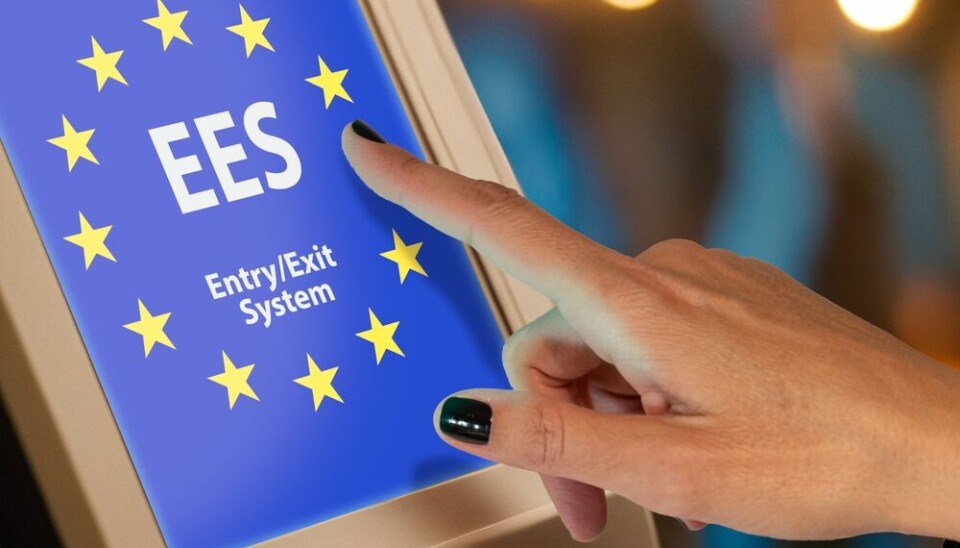
Several countries are making use of self-service kiosks for EES registration at borders but there have been technical hold-ups in France
Ivan Marc/Shutterstock
France is still finalising technical work on EES pre-registration kiosks/tablets as the final countdown towards full operation of the digital borders system begins.
The interior ministry told The Connexion it still plans to respect deadlines set in the EU’s phased rollout regulation last year.
The regulation states that in 13 days’ time (March 30) EU countries should be operating EES at all their external Schengen borders and for all eligible passengers.
This refers to non-EU/non-EEA/non-Swiss citizens visiting France from outside the EU. It does not refer to residents of EU countries such as France who have valid visas or residency cards (specific rules are in place for spouses of EU citizens).
Eligible travellers must be registered in a central EU database via border guard checks or self-service pre-registration equipment when they cross into or out of the EU.
Equipment at guards’ desks or at kiosks or tablet computers sends passenger details to central EU computers for storage so the person is recognised next time they cross the border and their dates and times of crossing can be logged each time.
From April 10, the system is set to be fully operational across the EU - including where French checks are carried out on UK soil at Dover, St Pancras and Folkestone (Eurotunnel) - and passport stamping is set to end. Tracking of people’s entries and exits, and respect of the 90/180 days visiting rule, will then be digital only.
Since launch the system is reported to have automatically identified 4,000 Schengen overstayers.
There have been concerns that with kiosks and tablets not yet in use for travellers in cars at major Channel ports, Eurostar and Eurotunnel, it will be hard for France to meet the deadlines. Questions were also recently raised as to whether ongoing deadlines during phasing-in have been met.
In response to our latest queries on readiness, the interior ministry said: “EES represents a major development that will significantly enhance internal security in member states while strengthening the tools used to combat irregular migration by ensuring the registration of arrivals and departures within the Schengen area.
“Indeed, as of February 20, and although its implementation is only taking place gradually, the system already contains nearly 20,000 records concerning refusals of entry into the territory issued against individuals posing a threat to the security of the Schengen area or a proven migration risk [editor’s note: this is EU-wide, and includes the ‘overstayers’].
“Furthermore, several human trafficking and smuggling networks have been dismantled thanks to the use of EES by the national authorities of member states (border guards, internal security forces, etc).”
The ministry added: “France is currently rolling out this tool gradually, in order to minimise the impact of this new procedure on the smooth flow of traffic at border crossings.
“To date, waiting times at the main airports, ports and international railway stations remain under control.
“The technological pre-registration systems will soon be deployed at the main border crossing points to enable more intensive use of EES whilst continuing to maintain a satisfactory level of flow.
“In parallel, the French authorities are working with the European agency Frontex on a mobile pre-registration app project that will reduce border control times.
“The phased roll-out of EES will come to an end on April 9. From that date, 100% of passenger flows must be registered.
“Nevertheless, member states will have the option of continuing to apply certain flexibilities provided for under the European legal framework for several more months, which will help maintain satisfactory levels of flow at the borders.
“EES registrations are already being carried out by French border guards at the Port of Dover and at Eurotunnel sites; these currently concern coach passengers and lorry drivers and are carried out directly at the checkpoints during checks.
“The technological tools for pre-registration, which will facilitate the formalities applicable to travellers travelling by car, are the subject of technical work currently being finalised.”
Some flexibility allowed for checks over summer 2026
Some flexibility will remain possible after full operation but it would be legally difficult to permit anything beyond this, as this system is strictly governed by several EU laws.
The phased-start regulation allows countries to fully or partially suspend EES at certain border points in the event of technical issues or “exceptional circumstances” leading to excessive waiting times. Partial suspension means operating EES without collecting biometric data, such as fingerprints or facial images.
For three months after the phased start ends – until July – countries may apply partial suspension for up to six hours at a time at specific crossing points if queues build up. They must report the reasons to the EU.
This flexibility may be extended for a further two months, until September, if fewer than 80% of passenger records during the phased start included full biometric data.
The European Commission denied reports that any further postponements are planned.
Travel body urges full use of flexibility
UK travel sector organisation ABTA has urged countries to make full use of the contingency measures and called on the commission to ensure clear communication of the rules to member states and border authorities.
It also urged the commission to keep the rollout “under close review, particularly as the number of passengers increases as we head towards busier periods”.
ABTA said that “underuse” of the contingency measures had already led to “occasions where passengers have been unnecessarily caught up in lengthy delays”.
The organisation also called on countries to deploy additional border guards during peak travel periods to help manage queues.