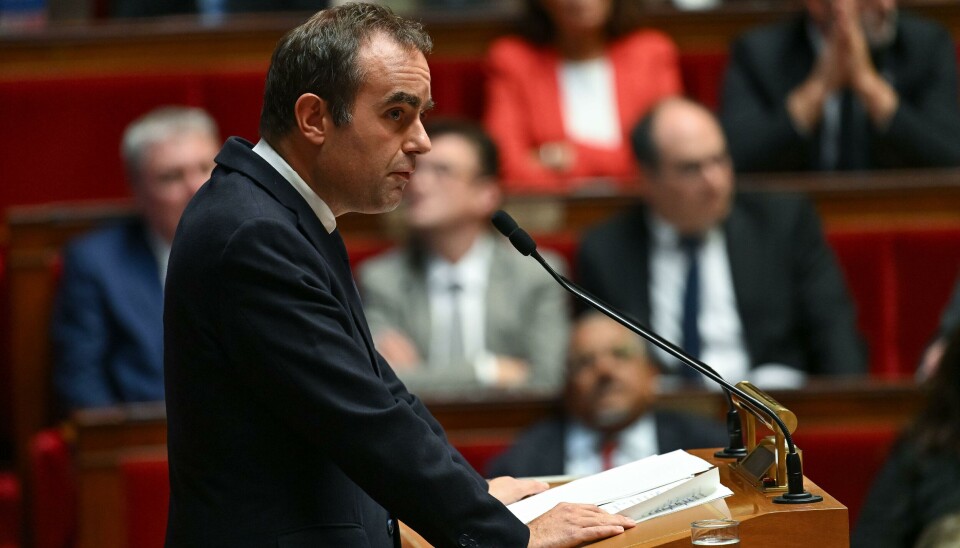
France’s main budget for 2026 will not pass before December 31, with MPs instead now set to pass an emergency bill to keep spending and taxes at current levels.
It is a repeat of what happened last year, when politicians were unable to reach an agreement on the 2025 budget.
However, the Social Security element of the budget, focusing on healthcare, benefits, and pensions – as well as suspending the 2023 pension reform – will come into force after it was approved by MPs earlier this week.
A US-style ‘shutdown’ of France will not take place as the emergency law will keep budgets, spending, and tax collection at 2025 levels until a new budget is agreed upon when parliament reconvenes in the new year.
Key services such as healthcare and your carte Vitale, tax offices, etc, will remain open and available as they were at the start of 2025 (when the budget for this year was not in place). Last year there were press reports saying this would not be the case however these proved incorrect.
However, many measures included in the budget either at the outset or included via MP and senator amendments, will not take place for the time being.
This includes additional taxes on small parcels and fast food outlets, increased fees for residency card applications and driving licence exchanges, and changes to VAT for self-employed workers.
They will only come into force if they are included in a version of the budget voted on next year, and even then with a delay as the measures will not be in force on January 1.
For the time being, the tax bands for 2025 income to be declared in 2026 will also likely not be increased in line with inflation. There were attempts last year to include such indexation in the special law, but it was ruled inadmissible.
The lack of a full budget will cause France to lose tax revenue and, as this is the second year running where a full budget has not been passed, and will do little to ease concerns from investors over French fiscal responsibility.
What has happened to get to this stage?
France’s main budget text for 2026, the projet de loi des finances (PLF) was opened up for debate by Prime Minister Sébastien Lecornu.
Mr Lecornu promised not to force the text through without a vote by using article 49.3, instead inviting politicians to debate and amend the text as it went through the Assemblée nationale and Senate.
Chances of the text passing this way without a government majority were always slim, with the chamber split roughly into three sections: far-left and left, centre and right, and far right - all of which have different views on what should be included in the bill.
The first reading of the text, heavily altered on all sides from the government’s first draft, was overwhelmingly rejected by 477 votes, with only one MP voting in favour of it.
A final version of the text drafted by the Senate was approved by Senators on Monday, and sent back to the Assemblée nationale. It was heavily modified and saw several taxes removed by the upper chamber.
MPs failed to find an accord and rejected the text.
A mixed group of seven MPs and seven senators met in an attempt to find a compromise on the Senate’s version of the text, but announced today that they were able to do so.
Due to the various mechanisms required to pass the budget, including promulgation by the president, today (December 19) was the deadline for MPs to vote the text through for it to be in place by December 31 and take effect for 2026.
With no final bill however, MPs have nothing on which to vote so by default the budget has failed to pass through the chambers.
Mr Lecornu kept his promise and did not elect to attempt to force through any version of the bill without a vote.
“I thank all the parliamentarians from all groups who worked and sought, in good faith, a reasonable compromise, as was the case for the social security budget,” he said in a social media post.
“I nevertheless regret the lack of willingness to reach an agreement on the part of some parliamentarians, as we have unfortunately feared for the past few days.”
What next?
France’s Conseil d’Etat has been approached to create an emergency law to keep spending and revenue collection at 2025 levels to allow the government to continue to function next year.
A similar text was required in 2024, meaning an unprecedented situation has occurred: France has failed to have a full budget in place for two consecutive years.
At the end of each month, MPs must vote to extend the emergency measures for the following month. In reality this is assured given the improbability of any MP voting for an end to the state.
MPs will reconvene in January to continue discussions on the budget, hoping to find a compromise on the text as soon as possible. With several elements needing to be removed from the bill (relating to implementation on January 1) and growing pressure, a form of the text is likely to pass through all chambers by spring.
After the failure of the 2024 budget, a shortened version was passed in February 2025 under then-Prime Minister François Bayrou.
Little will change for people in France on a day-to-day basis at the start of 2026. However the lack of funding will further increase France’s national debt, meaning additional spending cuts or increased taxes are likely to be required to account for lost revenue.
Mr Lecornu set himself the task of passing the budget when he was re-appointed as prime minister following his record-short first tenure.
With the bill failing to pass – not least because of Mr Lecornu’s attempt to compromise between parties – it is unsure if he will continue to hold the role of prime minister after the slimmed-down text is presumably passed in spring.