French anaesthetist jailed for life for poisoning 30 patients, 12 fatally
Doctor tampered with infusion drips before procedures to tarnish reputation of other doctors and prove himself a saviour
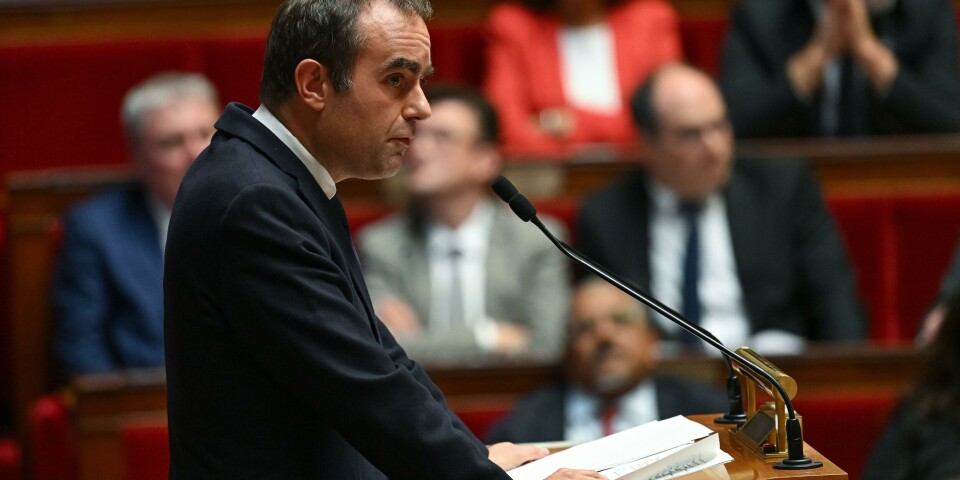
The trial lasted over three months and dominated headlines during that time. Inset photo is a screen capture from media outlet BFMTV showing Fréderic Péchier arriving at court in Besançon
NMK-Studio/Shutterstock/Screen capture from BFMTV
A former French hospital anaesthetist has been sentenced to life in jail for poisoning 30 patients, 12 of whom died.
The sentence was handed down by the Doubs Assizes court yesterday (December 18), after a trial that lasted nearly three and a half months.
The doctor, Frédéric Péchier, worked at two medical facilities in Besançon (Doubs) in eastern France.
Prosecutors described him as “one of the greatest criminals in history… [who] used medicine to kill.”
“You who have always portrayed yourself as a victim, you are not worthy of the title of doctor. You are the doctor of death,” said public prosecutor Christine de Curraize.
Péchier, a divorced father-of-three, pleaded not guilty and is set to appeal the case.
Alongside the historic medical crimes, the trial garnered significant attention due to the fact Péchier was not imprisoned during the investigation process that began in 2017, nor during the trial itself.
He was immediately taken to prison following the sentencing.
Patients aged 4 - 89
Victims were poisoned in two medical facilities Péchier worked at between 2008 and 2017, and ranged from ages 4 to 89.
The doctor drugged patients by adding local anaesthetic and potassium chloride into their IV drips, causing heart attacks.
The 12 deceased patients either died during their operation – in many cases routine procedures such as tonsil removal or for back pain – or immediately after.
Prosecutors claimed Péchier drugged patients so that doctors operating on them would be seen in a bad light after he fell out with several colleagues. This happened at both facilities he worked at during the timeline.
Péchier planned the poisonings so that he was usually nearby and able to intervene, positioning himself as a ‘saviour’ in light of another’s malpractice, and afterwards sought to receive the thanks of the patient and family.
He was not the primary anaesthetist for the targeted operations, but would come into clinics early to tamper with equipment.
Suspicions were raised due to the constant presence of Péchier when an issue occurred, his immediate knowledge of how to deal with the problem, and how in one instance he arrived in a room to help before issues even began.
Issues of adverse side effects from anaesthesia usage rose significantly at both clinics Péchier worked at, and returned to national averages when he was absent.
One of the clinics, Saint-Vincent, was able to link a drop and then increase in issues directly to Péchier’s departure and return to the facility.
"We are extremely relieved for all the victims, for ourselves, for the profession that has been tarnished, and we also have this satisfaction of being somewhat cleared of all this harm,” said Dr. Clément Darcq, a surgeon who operated on some of the victims and was a civil party in the trial.
The prosecutor highlighted that Péchier faced a dilemma as he would be blocked by his family - many of whom were in the medical profession - if he admitted what he had done.
Families of victims said they were satisfied with the sentencing.
“We will remember her thinking she was murdered, but that the justice system has recognised that, and that’s really important to us,” said the daughter of one victim.
“His guilt was obvious to us and to many others, so we are satisfied to know that he is in prison,” said another.
Retrial expected
The lawyer who represented Péchier during the trial said he was prepared to appeal the sentence, but would not be able to represent him alone.
Two other lawyers who were set to defend the client renounced the role prior to the trial starting.
“I remain convinced of Frédéric Péchier's innocence. There is a judicial decision rendered by the Doubs Assize Court, which I fully respect. The law provides for the right to appeal so that this trial can be retried,” said lawyer Randall Schwerdorffer following the verdict.
However, Péchier gave conflicting testimonies before and during the trial. Before the trial he claimed there were no cases of poisoning and that this would be demonstrated during the hearing - but then during the trial he admitted that a poisoner must have been present but he repeatedly said it was not him.
He is reported to have attempted to commit suicide twice, first in 2014 and then in 2021 during investigations into his medical conduct - however doubts were raised about this in the court.
.