Parliament debates if workers in France should be able to work on May 1
Labour Day protections are a particularly sensitive issue in France
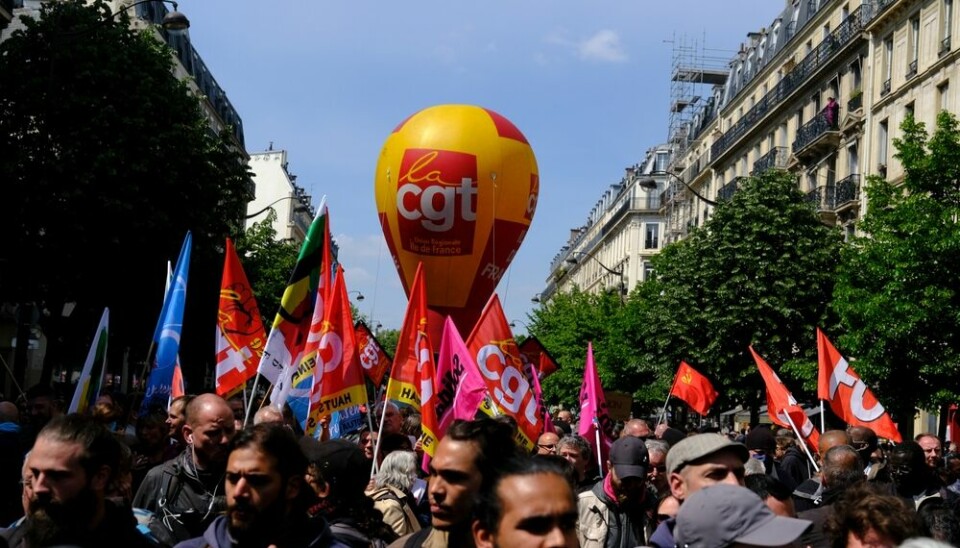
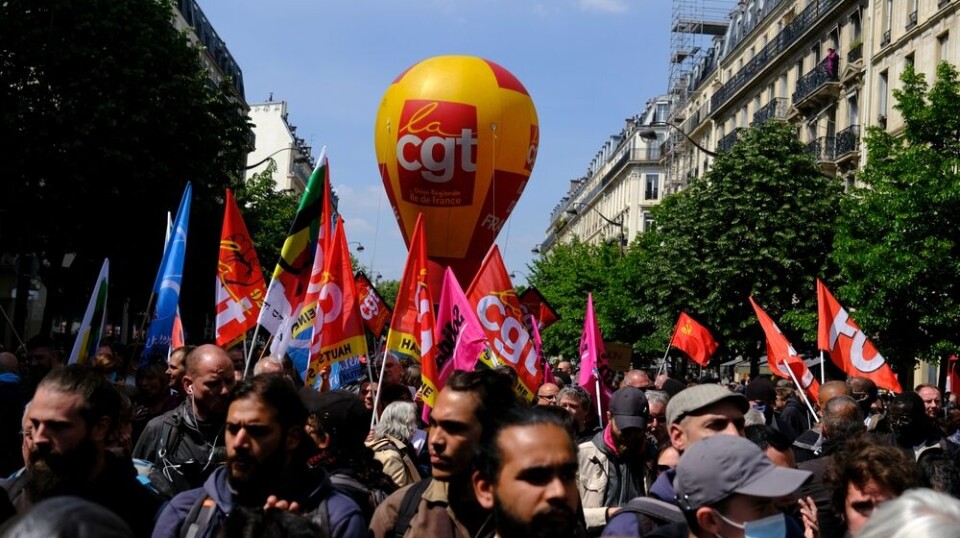
The leader of CGT worker’s union Sophie Binet called the issue of working on Labour Day a “red line”,
Alexandros Michailidis/Shutterstock
A politically sensitive proposal to allow some employees to work on May 1 - France’s Labour Day - is under debate in parliament, reopening a long-running dispute over one of the country’s most protected public holidays.
The draft law, already approved by the Senate in 2025 and backed by the government, was discussed by MPs on April 10.
Ministers say it would clarify legal grey areas affecting small businesses such as bakeries and florists.
Trade unions and left-wing parties argue it risks weakening a hard-won workers’ right.
A tightly protected public holiday
May 1 is unique in French labour law. Unlike other public holidays, it is legally required to be a day off for almost all employees, a principle in place since 1947.
Only sectors that cannot interrupt activity - such as hospitals, transport and emergency services - are permitted to operate, with staff paid double.
In practice, this has created tensions in recent years. Inspections and fines imposed on bakers and other small business owners for staff working on May 1 exposed inconsistencies between the law and long-standing custom.
Under current rules, shop owners can open, but cannot require employees to work. Breaches can lead to fines of €750 per employee, or €1,500 for minors.
The proposed law seeks to formalise exemptions for certain “local food retailers” - including bakeries, butchers and greengrocers - as well as florists and cultural venues such as cinemas and theatres.
Employees would need to volunteer to work and would continue to receive double pay. Refusing to work would not be grounds for dismissal.
The government insists this is not a rollback of the historic Labour Day protections, but a “clarification” of existing practice.
Strong opposition from unions
Unions have reacted sharply, framing the proposal as a symbolic challenge to the meaning of the May 1 holiday.
Eight major confederations have criticised what they describe as a gradual erosion of workers’ rights.
They also question whether “voluntary” working would remain genuinely optional in practice, pointing to previous reforms such as Sunday trading, where initial safeguards were seen by critics as weakening over time.
The leader of CGT worker’s union Sophie Binet called the issue “red line”, adding: “There are 364 other days to open,” she told news channel LCI. Ms Binet also warned that relaxing the rules could follow the same path as Sunday trading, which critics say has been progressively liberalised.
Supporters of the reform, including business groups representing artisans and small enterprises, argue the change reflects economic reality.
They highlight lost revenue on a key trading day - particularly for florists selling lily of the valley - and say some employees welcome the opportunity to earn double pay.
Some on the right have framed the debate more bluntly. Speaking on France 3, Rassemblement National MP said: “May 1 is Labour Day, not a day of idleness,” underlining the likelihood of heated parliamentary debate, which - along with the 100 amendments tabled - makes the bill’s outcome uncertain.
If adopted, ministers say the change could take effect from May 1, 2026.
In reality, however, the measure is unlikely to complete the full parliamentary process in time to apply this year.