



opinion
Eight years of Macron and France is back where it started
Movement that arose in 2018 set to return in October
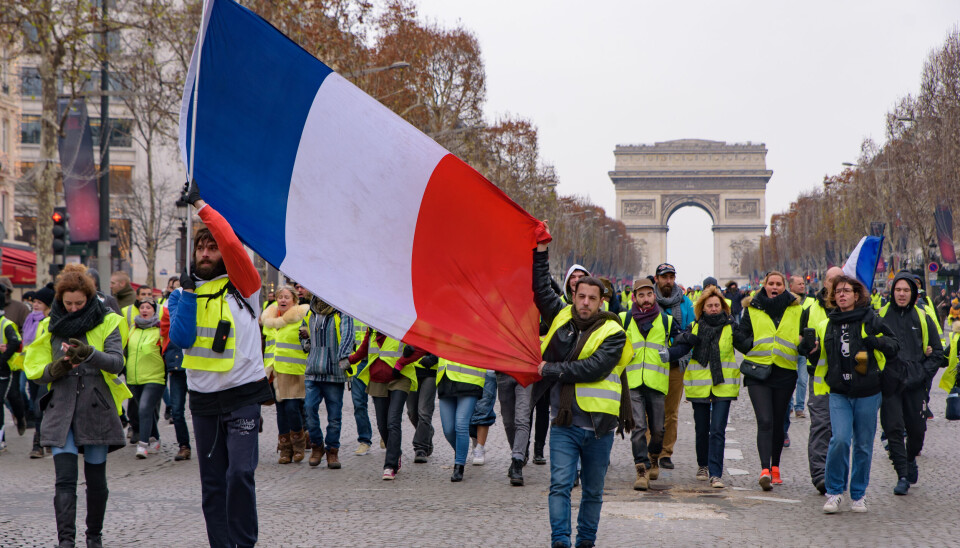


Eight years is a long time in the history of French protest movements, but it will feel like five minutes for Emmanuel Macron when the infamous gilets jaunes return to the streets this month.
It was on November 17, 2018 that thousands of men and women wearing high-visibility yellow vests [as required for motorists] mobilised across France. An internet petition had called for a drop in the price of petrol and diesel, and those who signed it were showing how angry they were.
Most were workers from isolated communities in a vast rural nation where vehicles are essential for day-to-day life. All felt alienated from a metropolitan elite personified by Mr Macron, a former merchant banker and so-called ‘President of the Rich’ who was accused of having no interest in the lives of ordinary people.
The original gilets jaunes protests
Frustration soon turned to violence, as the gilets jaunes caused tens of millions of euros worth of damage, not least to national monuments such as the Arc de Triomphe in Paris, during years of Saturday rioting.
This was despite Mr Macron caving in to their demands almost immediately, scrapping planned green taxes on fuel so as to bring the price down. This defied the spirit of the Paris Climate Change Agreement of 2015, and Mr Macron’s personal commitment to a cleaner world.
He was clearly rattled by the potential of the gilets jaunes to challenge his rule, and thought it safer to try and appease them.
A return to the streets
Such a cowardly approach is typical of French leaders who, since the Revolution of 1789, have pretty much always capitulated to the mob. Blood-curdling chants and barricades are a part of the country’s social fabric and – as the darkest days of gilets jaunes action showed – injury and even death are a distinct possibility when crowds are on the rampage and the notoriously reactionary security services respond in kind.
Fast-forward to October 17, 2026 and – once again – a massive gilets jaunes mobilisation is being called for, motivated by rising fuel prices. This time the hikes are mainly caused by conflict in the Middle East started by the US and Israel, America’s closest ally in the region, earlier this year. It has disrupted oil production and distribution, and sent the price of crude oil spiralling.
Macron's final months
What is certain is that Mr Macron will do everything in his power to placate the gilets jaunes. They helped define his first administration from 2017 to 2022, and there is every chance that his last months in office will once again explode into a long period of ferocious protest.
Mr Macron will be forced to stand down in May, following the maximum two terms allowed for any French president.
During his time in the Elysée Palace he has achieved hardly anything. On the contrary, parliamentary government has all but ceased to exist, while extremists from the far-left and right have become emboldened.
The vital economic reforms needed to reduce the cost of the state, so bringing down public debt, have all failed. Relatively small trade unions can still cripple whole sections of industry at a moment’s notice, while Mr Macron’s friend-to-everyone foreign policy has diminished France’s global prestige.
Meanwhile, billionaire industrialists continue to make eyewatering profits, while ordinary citizens suffer constant cuts, as any jobs available are threatened by numerous new developments, not least AI.
Paralysis has gripped France throughout the Macron years, just as it did during every other administration this century, and indeed in the decades before. In such circumstances, it is not in the least bit surprising that a leaderless movement that developed online, and which encapsulated the rage of the nation, should be ending the Macron era in the same way that it started it.


