American expats in France: 5 tips for your first tax season
US citizens must file with the IRS and the French authorities
American citizens abroad are granted an automatic extension, making their tax deadline June 15
Evgenia Parajanian / Shutterstock
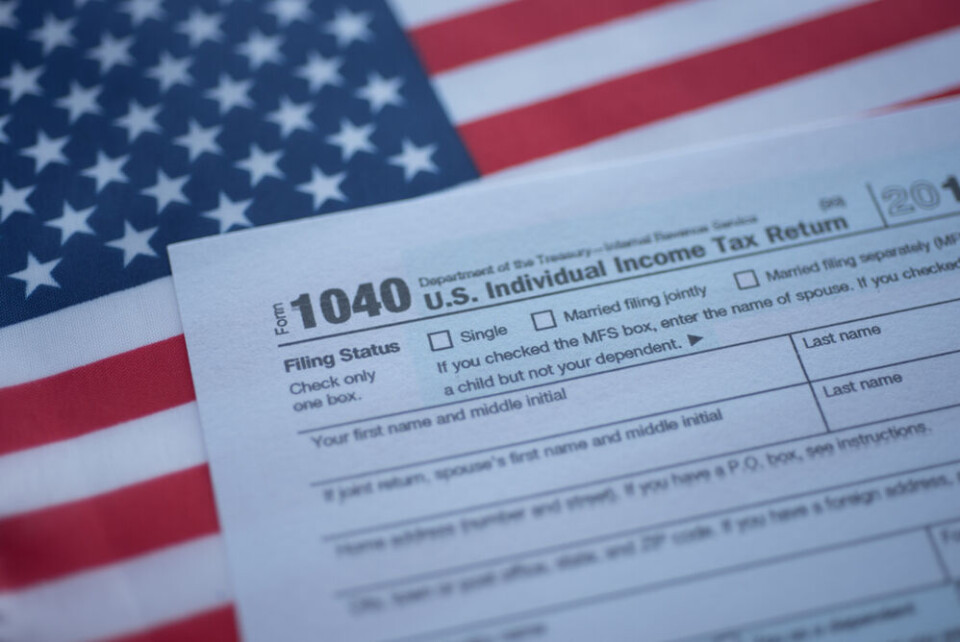
US citizens have tax obligations no matter where they live, with a complex system that varies from state to state. We look at five things to bear in mind when filing taxes as an American in France.
American citizens have to file taxes in the US if their income, including foreign income, exceeds certain thresholds – in addition to filing taxes in France.
The US tax filing season typically opens in late January and runs until April 15. However, American citizens abroad are granted an automatic extension.
In 2026, this means you have until June 15 to file. You can also request an additional extension, which would make the final filing deadline October 15.
Filing thresholds vary depending on age and filing status and are updated each year. You can check the latest figures on the IRS website.
You can find out about declaring your income in France in our French Income Tax 2026 help guide.
1. Ask for help to file US taxes abroad
“In my experience, at least for their first year, Americans need to request the help of a professional because the taxes are complex,” said Benjamin Pik, a dual French and American accountant and head of Paris-based Pik Consulting.
A list of France-based tax preparers registered with the US’s Internal Revenue Service (IRS), including Mr Pik, can be found in this directory.
Select France from the drop down menu, click search, and you will get a full list of credentialed tax preparers in the country.
2. Use online software for your taxes
Several online services are available, such as MyExpatTaxes and H&R Block, which can guide you through the filing process remotely.
However, if your situation is more complex - with multiple streams of income, investments, or property ownership - you may benefit from personalised assistance.
3. Remember to declare state taxes
If you have ongoing ties to a US state - such as residency status, a previous domicile, or income sourced there - you may also have to file state taxes.
The requirements vary significantly by state, and some are stricter than others in determining whether you remain a tax resident, so it is important to check the specific rules or seek professional advice.
4. Claim US tax credits for your income in France
There are a number of mechanisms designed to prevent double taxation, including the Foreign Earned Income Exclusion (FEIE) and the Foreign Tax Credit (FTC).
The FEIE allows US citizens living abroad to exclude foreign earnings from US taxation up to a limit that is adjusted annually for inflation (around $130,000 in recent tax years). Eligible foreign earnings only include employment-based income, not pensions or investment-based earnings.
The FTC allows US citizens living abroad to claim US tax credits equal in value to income taxes paid in another country.
In a country like France, with generally higher income tax rates than the US, this often means being able to claim enough US tax credits that you owe little or no US tax.
A professional can help you decide if the FEIE or FTC better suits your situation, or what other mechanisms may help you.
5. Declare foreign bank accounts to US authorities
US citizens are obliged to report their foreign financial accounts and assets to the US government.
This obligation follows the FBAR (Foreign Bank Account Report) rule and the FATCA (Foreign Account Tax Compliance Act).
To file your FBAR, use FinCEN Form 114. It is due April 15, with an automatic extension to October 15, and is submitted to the Financial Crimes Enforcement Network rather than the IRS.
It must be filed if the aggregate value of your foreign financial accounts exceeded $10,000 at any time during the year.
The FATCA Form 8938 has higher thresholds and is filed with your tax return submitted to the IRS.
For US expats, the threshold starts at $200,000 in foreign assets at the end of the year (or $300,000 at any point during the year), rising to $400,000 and $600,000 respectively for married couples filing jointly.