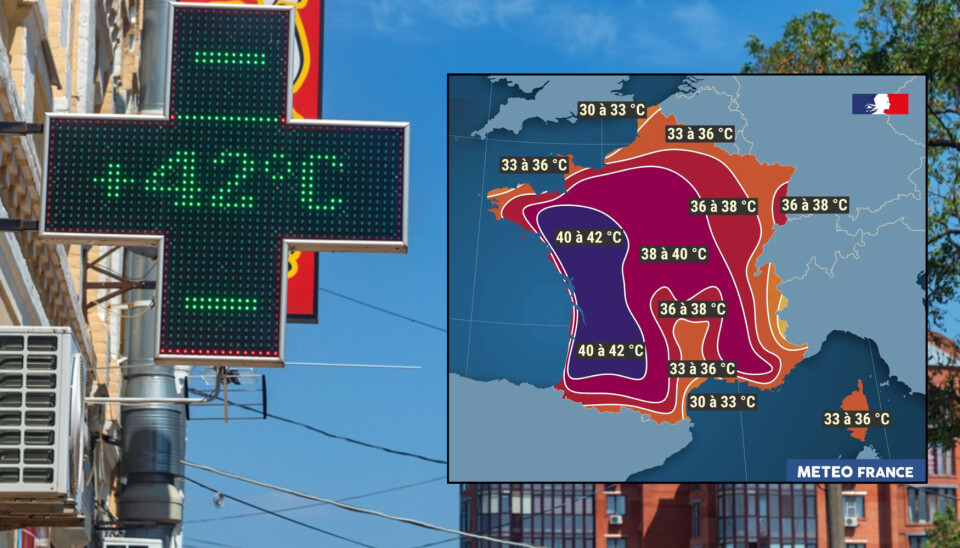
France remains in the grip of one of the most severe June heatwaves on record, with 54 departments under red alert on Tuesday and the alerts maintained into Wednesday.
The extreme heat is not expected to ease until at least Friday, with temperatures expected to remain above seasonal averages into next week.
Several deaths have been reported including two children, aged two and four, who were found deadinside a parked car in Vaucluse on Monday. Heat exposure is considered the leading hypothesis. Their mother has told how they became trapped after climbing into the car alone when she arrived home with shopping.
Officials warn that further heat-related deaths may come as temperatures continue to rise.
Families are advised to check on elderly, disabled or isolated relatives and neighbours.
Older and vulnerable people can be added to a list to receive regular checks from authorities. You can also, with the person’s permission, sign up a relative. The system was introduced after the deadly 2003 heatwave. We explain in this article how this works.
A free national helpline, Canicule Info Service, is also available from 09:00 to 19:00 on 0800 06 66 66.
A further 35 departments are under orange alert today, meaning around 90% of France’s population are now affected by heat warnings. Nearly 35 million people live in departments under the ongoing red heatwave alerts.
🔴🟠Un épisode caniculaire étendu, durable et intense, est en cours sur l'Hexagone. La chaleur atteint un niveau exceptionnel qui devrait durer jusqu’à jeudi au moins. De nombreux départements sont en Vigilance canicule rouge ou orange.
Le point complet 👉 meteofrance.com/actualites-e...
The most severe conditions stretch from Brittany and Normandy through the Paris region, central France and parts of the south-west. Temperatures are expected to remain exceptionally high throughout Tuesday and Wednesday, with many areas again reaching between 40C and 43C.
Météo-France describes the episode as being of "exceptional intensity", with a level of severity that could approach that of the August 2003 heatwave.
The heatwave is being intensified by an anticyclonic "heat dome" that has trapped very warm air over France since last week.
There continues to be a lack of overnight cooling. Minimum temperatures on Tuesday morning ranged from 20C to 26C across most of France, with temperatures of 23C to 26C - and locally 27C - recorded from Brittany to the Pays de la Loire and northern Nouvelle-Aquitaine. Some locations may again set new June records for overnight temperatures.
What does a red heatwave alert mean?
A red heatwave alert (vigilance rouge) is the highest level in France's weather warning system and is used for extreme situations that pose a threat to the wider population, not only vulnerable people.
Authorities warn that everyone can be affected by extreme heat, including healthy adults.
However, the risks are particularly high for elderly people, those with disabilities, chronic illnesses or mental health conditions, people taking regular medication, outdoor workers and athletes. Children also require special attention.
People are advised to drink water regularly, continue eating normally and cool themselves frequently using showers, baths, damp cloths, water sprays etc.
You should avoid going outside during the hottest part of the day and, if you must leave home, wear light clothing and a hat. Physical exercise and strenuous activity should be limited.
A total of 1,352 schools and collèges have been closed, mainly in departments under red alert, while around 1,800 educational establishments have adapted their schedules to avoid the hottest part of the day.
Rail services also continue to be affected. SNCF has announced cancellations on dozens of Intercités services, while some RER and Transilien lines in the Paris region have experienced disruptions as rail infrastructure comes under pressure from the extreme temperatures.
Wildfire and pollution risks
Authorities continue to warn of heightened wildfire danger across several regions as vegetation dries out under the prolonged heat.
A wildfire in the Cher department burned around 25 hectares of crops and prompted the evacuation of approximately 50 people.
Some prefectures have introduced temporary restrictions aimed at reducing fire risk and limiting pollution episodes caused by stagnant hot air.
Authorities in several regions have also introduced temporary measures to limit pollution and fire risks linked to the heatwave.
In Pyrénées-Atlantiques, speed limits have been reduced by 20km/h on motorways, national roads and departmental roads after forecasts warned of a pollution episode caused by stagnant hot air over south-west France.
The prefecture has also suspended exemptions allowing the burning of green waste and postponed certain agricultural and forestry burning operations.